How Print Shops Can Add Direct Mail to Their Service Offerings
Like your stock portfolio, your print shop needs to be diversified. Not too long ago, customers had to have a large Rolodex of options. If you wanted a book printed you went to one printer; signage, you’d go to somebody else; a specialty die-cut job, you’d shop around; and mailing, well that’s labor intensive — better find a reputable mail house.
Then came along the Wal-Mart way of thinking. More and more customers want their print media the same way they get their groceries and sporting equipment: one stop shopping. Well, we can’t put all the blame on Wally. One reason that the market is forcing this change is the expansion of media in general. If my business is juggling web design companies, social media consultants, videographers, mobile software coders, AND I need something printed — well, I’d like to know that the shop that did such a good job on the company magazine can also handle my direct mail campaign. I don’t want to add another specialty shop to my ‘to do’ list.
Your Shop Could Print AND Mail
Adding direct mail capabilities is as easy as adding the right equipment. Add a letter folder, an inserter and a pressure sealer and you’ll turn a nice little profit while making your customers happy.
Take the Formax 6402 Inserter for example. You can configure your machine to have up to six feeders including BRE’s. It’s fast – 4,000 pieces an hour. It’s easy to run – touchscreen control panel. And, it keeps your job in a neat sequential order so it’s ready for sealing and your outgoing mail bins.
When it comes to sealing, you may want to look into the variety of applications a pressure sensitive project may yield. It’s not just for checks and invoices anymore. Pressure sealed mailers offer an inexpensive direct mail option for your client and diversity for your shops catalog of services. Even mid-volume pressure sealers like the Formax 2030 model can crank out 9,000 pieces an hour. Operation is as simple as loading a stack into the feeder and pressing a button.
So, consider diversifying you portfolio. For a modest investment you’ll see a return that’s a little more reliable than Wall Street.
Three Battles Every Print Shop Owner Must Win
We’re seeing some dramatic changes in the printing industry, which makes it harder for us to keep everything afloat. We’re in a recession, the Internet is reducing the need for print, and green printing and sustainability is becoming the big buzz word, which is changing how we do our jobs.
Mitch Evans of Mitch Evans Consulting recently wrote about the three battles print shop owners need to win in order to succeed. I paid particular attention to this article, because these are the three battles I see my print shop customers fighting every day — at least, the ones who are aware it’s an issue. The ones who haven’t figured out which battles to fight, well, they’re not going to be around much longer.
Evans identifies the three as battles of Communication, Resources, and Cash.
The Battle of Communication
Communicating with employees can be tough. We’re constantly trying to walk that fine line between giving them the right amount of information or giving them stuff that we prefer to keep private. A lot of business owners struggle with whether to fill people in about finances, or keep it completely private. The problem is that owners don’t always think to tell their people what’s going on, especially when the news is bad. If you want to keep employees satisfied, and help them embrace whatever comes their way, communicate with them.
The Battle of Resources
How do you deliver your promises with fewer people, less time, and less money? Your customers are still depending on you to deliver. Their expectations — and yours — have not dwindled. Your expected productivity is still the same. But you have to do more with less. So how are you doing it? It may take overtime, changing your processes, adopting new technology, and letting go of old habits.
The Battle of Cash
This is the battle that affects, and is affected by, the other two. As Mitch Evans says, “each employee has an impact on whether your printing company is losing or winning the battle for cash.” But the challenge is that you need to communicate this battle to all of your employees, and then “manage the appropriate change in attitude and behavior.”
Cash flow is helped or hurt by your sales staff finding the right kind of customer and pricing the work correctly, the production staff completing it efficiently and without, and the accounts receivable department handling billing correctly.
As Evans says, those printers who win these battles will be well positioned when the economy turns around again. While the time to start fighting those battles is when the economy is doing well, there is (hopefully) still time to fight these battles the right way.
Why printers should offer print finishing and binding services
Printers who are determined to meet customers’ expectations and improve profitability are taking a close look at the advantages of acquiring new capabilities in print finishing and binding.
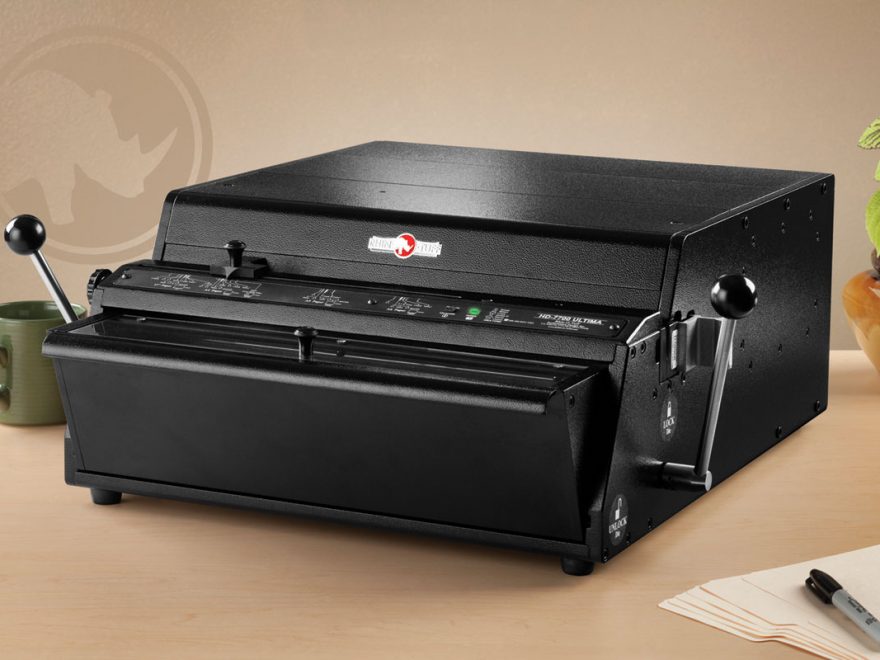
Adding bindery equipment to a printing operation creates new opportunities for adding value, competing on price and offering quick, on-demand service. That’s a formula for retaining customers, building sales and increasing profitability.
A printer with a complete bindery capability is able to offer the customer both a more expensive, value-added bindery option and a more economical alternative. As a result, the customer is more likely to find in just one vendor what’s most important for winning the business. In addition, owning your own bindery equipment enables better cost control, larger profit margins and shorter turnaround times. That can also enable you to bid on more jobs of various sizes and with a variety of requirements.
Some printers are interested in niche markets, such as photo books, where the print quality must be very high. When those niche players can also offer customized, very high quality print finishing, covers and binding, they’re in a better position to win new business.
A lot of printers today have added or are adding digital printing to their traditional offset capabilities. That’s a smart way to build business, but it does require the printer to plan his finishing and binding operations to deal with the different physical characteristics of digital output from offset products. Digitally printed products have more color, heavier ink or toner coverage, more coated stocks and collated sets as compared to offset output. That means the digital products require finishing and bindery equipment that won’t misfeed coated stock, won’t crack inks and toner, and will maintain the integrity of sets, among other considerations. If you’re adding finishing and bindery equipment in-line with your digital press, those issues shouldn’t become problems. But if you’re opting for a hybrid workfolow where digital and offset printing output is going to the same bindery equipment, you’ll probably want the advice of the bindery manufacturer.
Printers who already have their print finishing and binding in-house may need to take a look at the manual labor required by their older machinery. When manual labor is relatively inexpensive, your current set-up might still make sense. But modern bindery equipment is much more automated and thus less labor intensive. As labor rates rise, you may want to upgrade to new bindery equipment that requires fewer people and less skill to operate.
Another reason for automating would be to eliminate any bottleneck that manual labor is creating in the production process. Smoothing out the bottlenecks potentially would improve both profitability and turnaround time, which would contribute to customer satisfaction.
For more information about acquiring print finishing and binding capabilities, see Karen Lowery Hall’s article on Quick Printing Magazine’s Website.
The Controversy Over Green Printing
Carbon offsetting, you’ve likely heard of it – it’s the practice of mitigating your carbon emissions not through changing your actions, but by paying a fee to a carbon offsetting scheme. For some printers, it’s a way to distinguish themselves as a green printing company. For others, it’s a relatively unregulated industry that does little to actually help the environment.
PrintWeek magazine ran an interesting article a couple of weeks ago,
Tags: Green Printing, print shops
Ten Steps to a Greener Print Shop, Part 2
Last time, we covered the first five steps to a greener print shop. Here are the remaining five.
6. Offer green paper options
Offer your customers a range of ‘green’ papers from recycled stock to paper made from alternative sources such as hemp, cotton, or even stone (yes, we said “stone”). And while you’re at it, learn about your paper. A good green printing company should not only offer a greener product, they should be able to explain exactly why that product is more environmentally friendly.
7. Reduce your in-house energy consumption
New machinery won’t just improve your productivity and print quality, it can also drastically reduce your energy consumption. Turning off the lights when you leave is one thing, but saving thousands of watts a year on a major piece of equipment is a whole other ballgame.
8. Dispose of your waste properly
Sustainable printing doesn’t stop once the print job has been shipped. Your green practices should extend all the way to your waste disposal and recycling. Do you know what qualifies as hazardous waste in your shop? Do you know how to dispose of it properly? Are you disposing of it properly? Is it possible to switch to a printer or ink that’s non-toxic and therefore does not generate any hazardous waste?
9. Dispose of your equipment properly
So, you’re buying a new printer that’s energy-efficient and better suited to non-toxic inks. What are you going to do with your old one? How will you dispose of it? Is it possible to reuse any of the parts or find someone who could reuse the parts? A number of equipment manufacturers run recycling programs, you just have to ask.
10. Scrutinize your supply chain
You may claim to be the most green printing company in the world, but that doesn’t mean much if your suppliers are some of the planet’s worst environmental offenders. Do your best to make sure the suppliers you’re dealing with are not only doing their own bit to reduce their environmental impact, but can back it up too. It’s one thing to stamp “Green” on a product, it’s another to prove it.