The Print Finish Blog
by The Print Finish Blog

Don’t Forget Your Margins – A Graphic Designers Primer on Bindery

August 12, 2009 · Filed Under Binding, Graphic Design, Print Shop · View Comments 

As more graphic designers are being trained for web production instead of print, they tend to forget the small details, like setting proper margins when they’re creating print jobs that are going to be bound.

Most designers usually only make this mistake once, and then the lesson is remembered forever. But it can still be an expensive mistake to make, if you don’t have someone who catches it before the job prints, or if you have to do an expensive reprint.

Before you start, be sure you use the proper margin settings. When you setting up a new document in your page layout program, be sure you select the option that lets you set inside and outside margins, not left and right margins. You use left and right margins if you’re printing one-sided sheets, like a typical report. You should be able to select double-sided as a layout option, which should then activate the Inside/Outisde layout option.

Here are a few important points to keep in mind, based on the different bindery options.

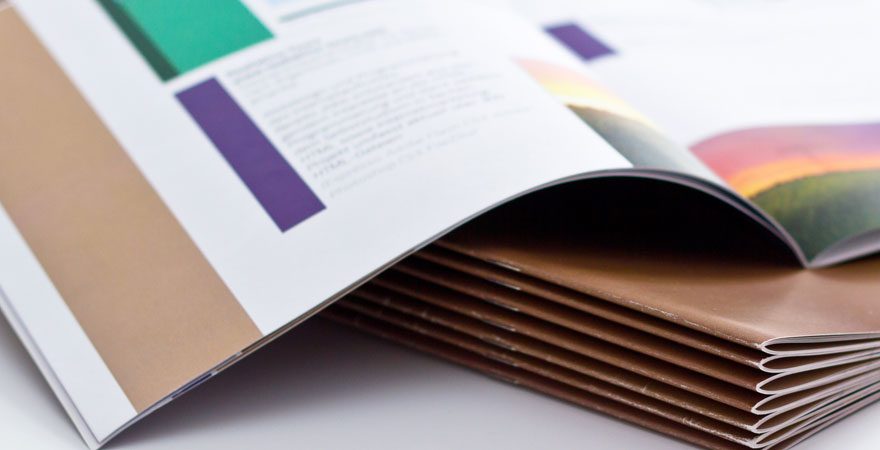
  • Saddle stitch: This is the typical staple-in-the-center bindery method. While you don’t lose a lot of interior space, you will lose a little on the outside. That’s because when you stack several folded sheets together, you start to get a fanning effect, where the innermost pages stick out beyond the front cover. When this happens, the pages have to be face cut, and you can lose as much as .25 inches off the outside margin. Talk to your printer and see what they recommend.
  • Perfect Binding: Your typical book binding. Most book publishers want a 1.5″ margin for an inside margin. Take a look at a book, and see how much you’re able to see on the pages in the middle. As you get further into the book, the pages are harder to open, which means you need some extra white space. Some trade paperbacks, like the Dummies series
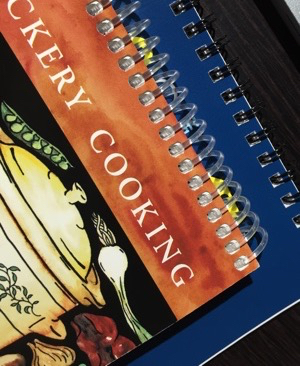
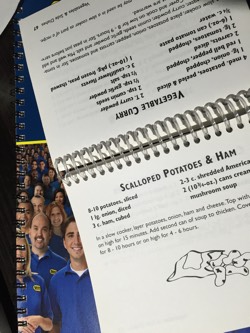
  • Comb, Coil, Spiral, and Wire binding: These books are made to lay flat, unlike perfect bound books. It’s like laying two stacks of paper side by side, with about a .25 inch gap between them. Because of this, graphics should not cross pages. That is, don’t create a two-page photo spread, especially if you’re going for something really fancy and high class. You can do it with saddle stitching, especially if you can land it on the center page of the book, but it just doesn’t look good with these spreads. The margin for these books should run around 1.5″, but can go up to a 2″ inside margin. Talk to your printer to find out what he or she recommends.

8 Common Print Binding Techniques

July 24, 2009 · Filed Under Binding, Print Shop, Products · View Comments 

Cost, content and target audience should influence your choice of print finishing and binding.

In today’s media market, every publication you print has to work harder than ever before to impress its audience and properly present its content. Yet cost control has never been more important. That’s why it’s so important to match your audience, content and budget with the right type of print finishing, binding process and bindery equipment. Here are some considerations for the printer who’s committed to pleasing the client:

  • Saddle stitching is inexpensive and is well suited for large press runs, such as with a mass-market magazine. In this binding method, loose sheets are laid over a saddle-like holder where staples are forced through the spine of the pages at a very rapid rate. Investing in bindery equipment for saddle stitching would make the most business sense when the volumes are high and the publication’s shelf life is short.
  • Side-stitch binding is an option when the publication is small, impressing an audience isn’t the goal, and unit costs must be very low. The process is similar to saddle stitching, except that the staple is forced through the sides of the pages near the folds instead of through their spines. It will give you a less attractive and less durable binding.
  • Perfect binding is the best choice when the publication is larger (50 pages or more), the audience is more up-market and/or the look and feel of the publication must imply that its content is special and substantial. Annual reports, textbooks and upscale magazines are typically perfect bound. In this process, all of the pages are placed together and stitched through the spine. Then the spine edge is ground flat and the cover is glued on.
  • Case binding makes sense when the publication must be very durable as well as impressive. The process is almost the same as perfect binding, except that the spine is reinforced with a cloth strip before the cover is attached.
  • Comb binding is ideal for business reports, cookbooks and workbooks because it allows the finished publication to lie flat when opened and permits pages to be added and removed. This method is also used by companies to bind internal, short-run publications, such as training and product manuals and other publications not intended for customers or not subject to hard use. In comb binding the curved plastic teeth of a comb are inserted into holes along the edge of the pages.
  • Coil or spiral binding also allows the finished publication to lie flat when opened. In this method, a wire or plastic spiral is threaded through round holes punched in the edges of a stack of the pages. While the finished binding is more durable than with comb binding, pages can’t be added or removed. You might use this process for journals, student workbooks or other publications intended for frequent or hard use.
  • Wire binding uses tooth-like loops of wire in a fashion similar to comb binding, but produces a much sturdier binding because the binding material is metal instead of plastic.
  • Post binding is for heavy-duty publications with constantly changing content. Examples include scrapbooks, photo albums and carpet sample books. The binding process is simply metal posts pushed through punched holes in the pages and anchored with bolts that thread into the center of the posts.

Each binding method also has variations involving the use of special materials — such as ribbons or screws — and more manual labor. Unit cost is higher, but the resulting publication will stand out. Commemorative albums, special event programs and menus are some of these specially bound publications.

For any printer considering the purchase of bindery equipment, the most important consideration, of course, is what your customers want. If they all have similar needs, then you need only a limited range of binding capabilities to satisfy them. But if your customers’ expectations are diverse — or if you’re planning to expand into new markets — then the wider range of capabilities that come with having a wider range of bindery equipment would make the best business sense.